
We are adding speakers' names to the programme as they are confirmed. Please check back regularly for updates.
There will be a welcome reception and cocktail evening on 9th June from 18:30 to 20:30.
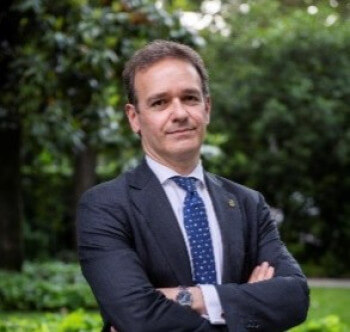
Welcome from EBIC President
Carlos Rodríguez-Villa Förster

Plenary 1: KEYNOTE
Working together to design policy and markets that deliver competitve, resilient and sustainable agriculture
- Geneviève Pons, Director General of Europe Jacques Delors, Brussels
Includes audience Q&A

Plenary 2
- David Barton, Senior Consultant, Prospero & Partners
Plenary 3
Moderated panel with:
- Riccardo Preve, CEO, Riso Gallo
- Other panellists to be confirmed
Agriculture is increasingly recognised as part of Europe’s security architecture. Farmers are not only food producers but also the first link in supply chains that underpin food security and provide essential raw materials for a wide range of industrial value chains. As geopolitical tensions, climate pressures and market volatility reshape the global landscape, how can we best support farmers as the guarantors of supply chain resilience?
This session will explore how farmers can be better equipped to fulfil this role, and how policymakers and industry can work together to strengthen agriculture’s position as a strategic central pillar.
Networking Break
Parallel joint-problem solving sessions
Climate volatility is rapidly increasing the risks facing agriculture everywhere. With climate-related losses in the EU already estimated at around €28 billion per year and projected to rise significantly in the coming decades, ensuring the resilience and security of harvests has become a critical priority for farmers, policymakers and the downstream customers of agriculture output alike. Yet a central question remains: who bears the risks associated with the transition to more resilient production systems?
This session will examine how to reduce yield volatility, improving the insurability of agricultural production and helping to lower the cost of risk across the value chain, including the role of plant biostimulants.
- Panellists to be confirmed
Improving resource use efficiency and advancing more circular approaches to plant nutrition are becoming central to Europe’s efforts to strengthen agricultural sustainability and resilience. At a time when fertiliser markets remain exposed to geopolitical and energy price volatility, optimising nutrient use and recycling serves strategic autonomy, environmental sustainability, and farmer profitability.
This session will explore how innovative plant nutrition products, including plant biostimulants, can make plant nutrition a key lever of more resilient farming systems.
- Panellists to be confirmed
Agriculture is a cornerstone of Europe’s circular bioeconomy, providing renewable raw materials that support a growing range of industrial value chains—from food and feed to bio-based materials, chemicals and energy. In a shifting geopolitical landscape, making better use of Europe’s own biological resources is increasingly seen as a strategic priority for strengthening innovation, competitiveness and economic resilience. Yet across multiple sectors regulations designed for a bygone era seem to struggle to realise the ambitions of bioeconomy policy.
This session will explore how innovation, investment and supportive regulatory frameworks can accelerate or constrain the development of Europe’s bioeconomy, enabling bio-based industries to scale while contributing to growth, jobs and economic dynamism.
- Panellists to be confirmed
Lunch and Networking
Plenary 4
Reporting back from the parallel joint problem-solving sessions
- Resilience and security of harvests in the face of climate variability
- How nutrient circularity and efficiency enhance food chain resilience
- How agriculture and bioeconomy innovation can couple competitiveness and resilience
Global trade patterns are undergoing a profound shift as geopolitical tensions, economic security concerns and climate pressures reshape the international economic landscape. Agriculture sits at the centre of this transition: food systems, agricultural commodities and bio-based resources are increasingly viewed not only as tradable goods but also as strategic assets.
This session will bring together perspectives from Europe and beyond to explore how trade policy, geopolitical realignment and agricultural policy may interact as the global economy reorganises, and what this could mean for farmers, supply chains and food security.
Moderated panel with:
- Panellists to be confirmed
Closing Session
Closing Call to Action from EBIC President
Carlos Rodríguez-Villa Förster
Networking Break
EBIC members and invited guests will convene in a private session to engage in joint sense-making from the event
The discussion will be opened by our panel:
- Panellists to be confirmed
Times of turbulence bring risk and opportunity simultaneously. In this Fireside Chat, let's explore where there are opportunities for the biostimulants industry to continue growing as well as potential risks, bearing in mind the insights that you gained during today's Summit.
In the past five years, we have faced a series of seismic changes in the world order at economic, political, technological, and logistical levels not to mention the increasing number of extreme weather disruptions. What are some new opportunities you have seen emerging from the upheaval, not just for individual companies, but for the industry as a whole? Where can we create value by moving together, rather than alone?
Biostimulants are enablers of more resilient and competitive agriculture, which is a central priority of the EU Vision for Agriculture and Food. How can we harness this new dynamic in EU politics to support both company growth and the continued development of the biostimulant industry as a whole? To what extent can sustainability benefits be sold to farmers as a distinct from agronomic performance?
The current era is VUCA (volatile, uncertain, complex, and ambiguous). Are there specific elements of this turmoil that are particularly challenging for your company and/or the biostimulants industry? Where could coordinated action through EBIC unlock greater stability, legitimacy, or even new demand?
The arc of innovation: from proliferation to consolidation. How can biostimulant companies navigate their company lifespan from emergence as a start-up to scaling up and/or acquisition? What challenges and opportunities do the different stages present and how can EBIC support its members, regardless of where they are in the developmental cycle?